
Which countries are in G7: France, the United States, the United Kingdom, Germany, Japan, Italy, and Canada
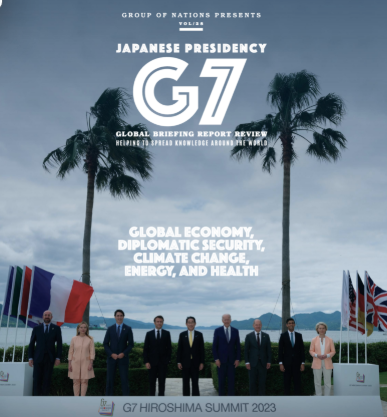
Overview of G7 Members
Germany
Germany currently holds the G7 Presidency, which it assumed in January 2022. As host of the G7 Summit, Federal Chancellor Olaf Scholz welcomed the heads of state and government to Schloss Elmau in Upper Bavaria.
Learn more about Germany’s role here.
France
France, together with Germany, initiated the first World Economic Summit in 1975, which later evolved into the G7. The inaugural meeting was held near Paris. France is represented by President Emmanuel Macron.
Learn more about France here.
United Kingdom
The UK has been a G7 member since its inception in 1975 and has hosted several summits, most recently in Carbis Bay, Cornwall, in 2021. The current Prime Minister is Rishi Sunak.
Learn more about the UK here.
Italy
Italy was a founding participant in the first summit held in France. The country is represented by Prime Minister Giorgia Meloni.
Learn more about Italy here.
Japan
Japan has been a member since the very first summit in 1975. Prime Minister Fumio Kishida currently represents the country.
Learn more about Japan here.
Canada
Canada joined the group at the 1976 summit in Puerto Rico, solidifying the formation of the G7. Prime Minister Justin Trudeau leads Canada’s delegation.
Learn more about Canada here.
United States
The United States has participated since the inaugural summit in 1975, which laid the foundation for the G7. President Joe Biden is the current U.S. representative.
Learn more about the USA here.
European Union
The EU has been actively involved in G7 meetings since 1981. It is represented by European Commission President Ursula von der Leyen and European Council President Charles Michel.
Learn more about the EU here.

Who’s at the 2025 G7 Summit? A Snapshot of Global Leadership in Kananaskis
The 2025 G7 Summit, held from June 16 to 17 in Kananaskis, Alberta, Canada, brought together leaders from the world’s most advanced economies to address pressing global challenges. Hosted by Canadian Prime Minister Mark Carney, this summit marked a significant moment in international diplomacy, featuring a mix of seasoned leaders and new faces on the global stage.
🇨🇦 Canada – Prime Minister Mark Carney
As the host nation, Canada’s Prime Minister Mark Carney welcomed fellow leaders to the picturesque Rocky Mountains. This summit was Carney’s first major international appearance since taking office, following Justin Trudeau’s resignation. His leadership was pivotal in setting the tone for discussions on global economic recovery, climate change, and digital governance.
🇺🇸 United States – President Donald Trump
Returning to the presidency in January 2025, Donald Trump attended the summit but left early due to escalating tensions between Israel and Iran. His early departure disrupted plans for a joint communique and highlighted the urgency of addressing Middle Eastern conflicts. Despite this, Trump engaged in key discussions, emphasizing the need for a ceasefire in the region .
🇬🇧 United Kingdom – Prime Minister Keir Starmer
Keir Starmer, leading the UK since July 2024, participated actively in the summit. His presence underscored the UK’s commitment to global cooperation, particularly in areas like climate action and international trade. Starmer’s leadership was seen as a stabilizing force amid the summit’s complex geopolitical discussions.
🇫🇷 France – President Emmanuel Macron
President Emmanuel Macron continued his leadership role, representing France’s interests in global affairs. His participation was crucial in discussions on European security, economic stability, and climate change initiatives, reinforcing France’s position as a key player in the G7.
🇩🇪 Germany – Chancellor Friedrich Merz
Assuming office in February 2025, Chancellor Friedrich Merz brought a conservative perspective to the summit. Germany’s involvement was central to dialogues on economic policy, energy security, and the European Union’s role in global governance.
🇮🇹 Italy – Prime Minister Giorgia Meloni
Prime Minister Giorgia Meloni, Italy’s first female head of government, represented Italy at the summit. Her leadership focused on strengthening EU ties and addressing Mediterranean regional issues, contributing to the G7’s broader discussions on international cooperation.
🇯🇵 Japan – Prime Minister Shigeru Ishiba
Newly appointed in October 2024, Prime Minister Shigeru Ishiba represented Japan’s interests in the G7. His participation highlighted Japan’s commitment to global economic stability and its role in addressing technological and environmental challenges.
🇪🇺 European Union – Presidents Ursula von der Leyen and António Costa
The European Union was represented by two key leaders: Ursula von der Leyen, President of the European Commission, and António Costa, President of the European Council. Their dual representation emphasized the EU’s unified stance on issues like digital governance, climate change, and international trade.
🌍 Invited Leaders and Special Guests
The summit also featured leaders from outside the G7, invited to contribute to broader global discussions:
- Australia – Prime Minister Anthony Albanese
- Brazil – President Luiz Inácio Lula da Silva
- South Africa – President Cyril Ramaphosa
- South Korea – President Lee Jae-myung
- Ukraine – President Volodymyr Zelenskyy
Notably, India‘s Prime Minister Narendra Modi was initially not invited due to strained relations with Canada following the 2023 assassination of Canadian Sikh leader Hardeep Singh Nijjar. However, diplomatic efforts led to Modi’s invitation, marking a significant step in mending bilateral ties .
🌐 Global Focus Areas
The 2025 G7 Summit addressed several critical global issues:
- Climate Change and Energy Security: Leaders discussed strategies to combat global warming and ensure sustainable energy sources.
- Global Economic Recovery: Collaborative efforts were made to stabilize and grow the global economy post-pandemic.
- Digital Governance: The summit explored frameworks for regulating emerging technologies and ensuring cybersecurity.
- Geopolitical Stability: Ongoing conflicts, particularly in Ukraine and the Middle East, were central topics, with leaders seeking unified approaches to peace and security.
📸 Visual Highlights
Photographs from the summit captured leaders engaging in discussions against the stunning backdrop of the Canadian Rockies. These images showcased the collaborative spirit of the summit and the commitment of global leaders to addressing the world’s most pressing challenges.
🇮🇳 India’s Participation
India’s inclusion in the summit, despite earlier tensions, underscored the importance of diplomatic engagement. Prime Minister Modi’s participation allowed India to contribute to discussions on global economic stability, climate change, and digital governance, reflecting its growing influence in international affairs.
📰 Stay Informed
For more detailed coverage and updates on the 2025 G7 Summit, consider following reputable news sources and official G7 communications. Engaging with these platforms will provide in-depth analyses and insights into the outcomes of this significant international event.